Prepared for the Navarro family · September 2026
“You learn to play for something bigger than yourself.”
Emma Navarro, on what she loved about college tennis at Virginia. For almost every player, that ends at graduation. This page is about what happens if it doesn’t.
UVA Today · 24 July 2024 · Eight sections, about five minutes
In the stands in Atlanta, watching her sister play · Season 2
■ Where the team ends
Tennis has teams until twenty-two. Then it doesn’t.
“I loved college, and I loved being part of a team.” Every college player can say the same — and almost none of them get a team to play for afterwards.
What INTENNSE is
Professional tennis built as a team sport: a draft, rosters of three men and three women, league-provided coaching, and an eight-week summer season with standings. Players are paid a $40,000 base to compete, with total earnings of up to $70,000.
Nobody is paid simply to compete on the individual tour, at any ranking. Prize money has to be won, and the tour is unsustainable for almost everyone below the top two hundred. So the choice facing a graduating player has been to chase that tour or stop. Draft registrations rose 748% this year, 144 of them from women. They were looking for somewhere to keep playing.

■ What already exists










A season that already runs.
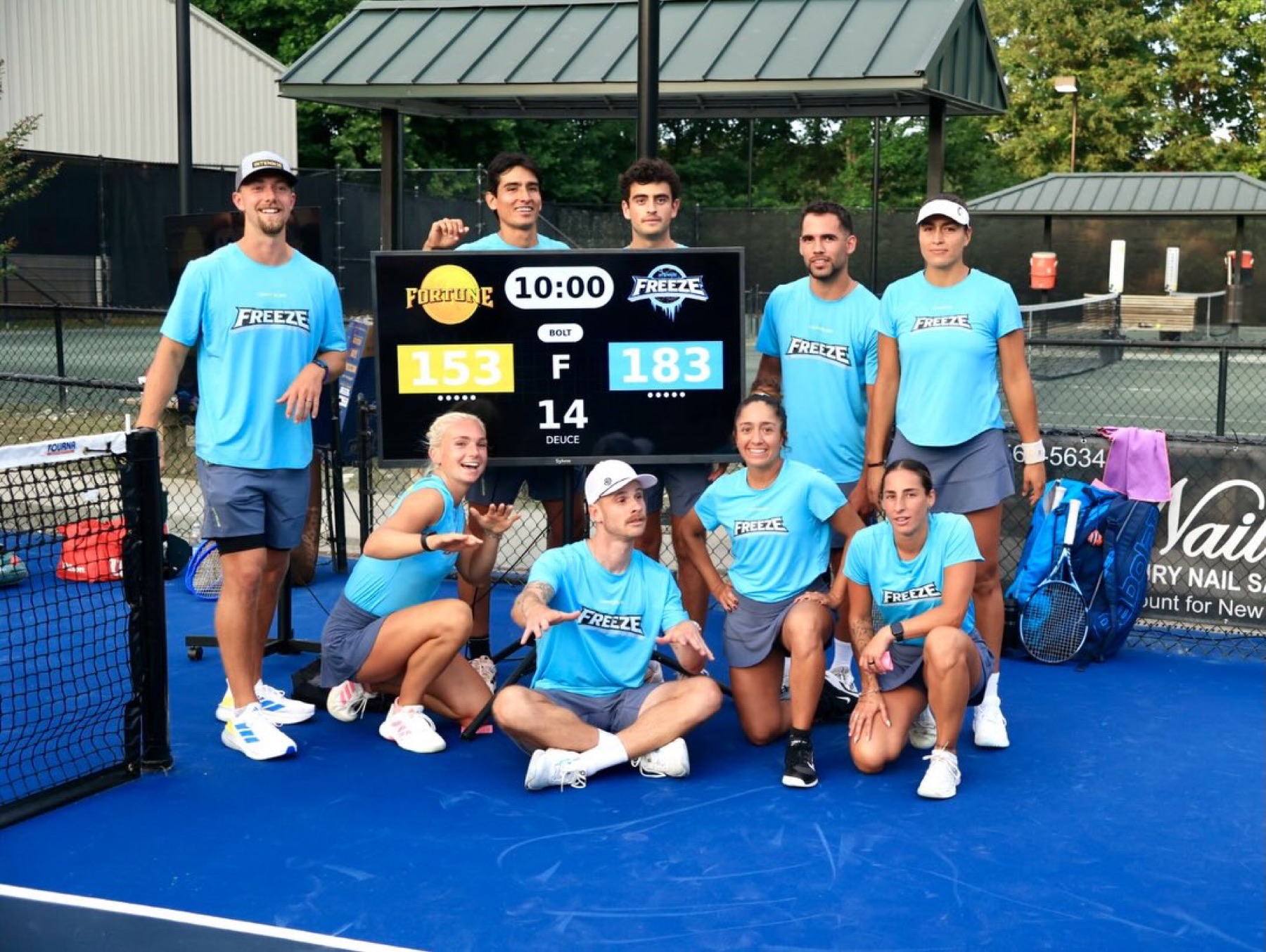
Ten professional teams, eight weeks, fifty-one matches, all of it staged in one metro for now. Season 2 closed on 1 August with Freeze beating Outriders 137–130.
How an INTENNSE match works
Each match, which we call an Arc, is time-boxed: it starts and finishes when the schedule says it will. Singles and doubles count equally toward one team score, a serve clock and a single-ball rule keep it moving, and the result is decided by points banked across the whole night rather than by who wins the last set.
The women’s results decide the tie exactly as much as the men’s, so every team that exists creates as many professional places for women as for men.
The Rules of INTENNSE, explained · 2:04
Record live concurrents across the final series.
Nearly 8,000 fans through a 500-seat arena.
Two broadcast, two RSNs, seven FAST, three streaming — 60% of watch time on TV.
Average across forty local airings on Peachtree; the best single Arc drew 116,000.
■ The calendar
Your venues’ summer is our season.
INTENNSE runs from June into the first days of August — after Charleston has closed, and ending just before Cincinnati opens.
Spring
The Charleston Open fills Credit One Stadium.
June – July
An eight-week professional season, looking for homes.
August
The Cincinnati Open, and its expanded opening weekend.
Why that fit is unusual
Few owners anywhere in tennis hold a combined 1000, a standalone WTA 500, an eleven-thousand-seat stadium and member clubs on both campuses. Between the two tournaments sit the summer months when neither venue is hosting professional tennis, and those are exactly the months our season needs courts, crowds and a broadcast home.
A team league is also the one kind of tennis a tournament can’t produce on its own: a reason for the same fans to come back every week, to people they know, rather than once a year for a draw that is different every time.
■ The premise
The team doesn’t visit. It lives there.
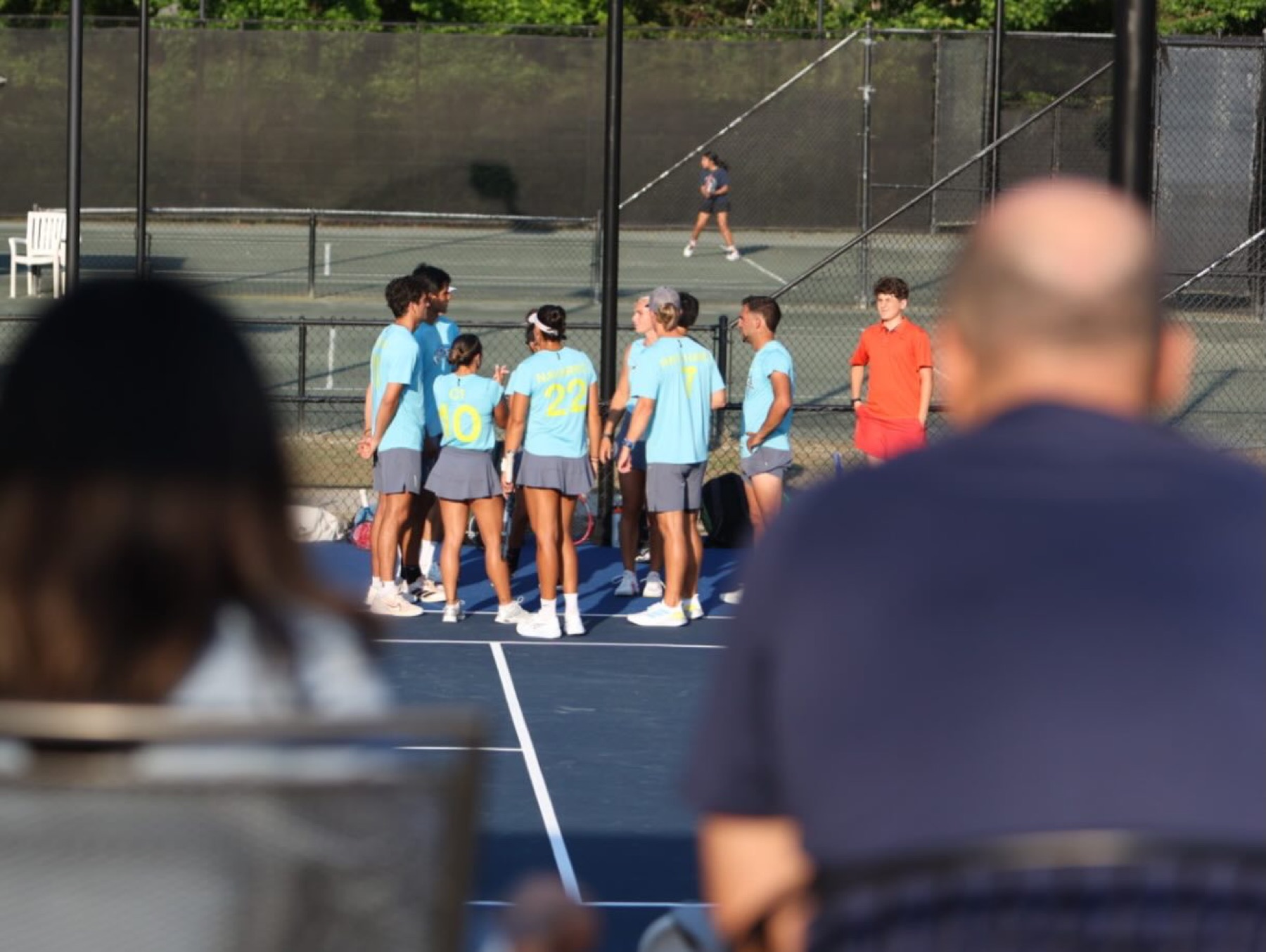
Every INTENNSE team has a home club — not a venue it books, but a club it trains in, year round, alongside the members. It runs on courts the sport already has.
What a resident team changes
A tournament arrives, is watched, and leaves until next year. A resident team does the opposite: the professionals and coaches are in the building on ordinary days, next to the juniors on the next court and the adult league on a Wednesday night. The kids don’t watch a player on television and hope — they train down the hall from one.
That is a different kind of value from a tournament’s, and it compounds on the same courts. The format runs on club hard courts, in a dome on a weeknight, or on public courts with a portable scoreboard. The arena is where we broadcast from; it isn’t what the format requires.


■ Juniors, and the way in
“Promote junior tennis in Charleston, and make the sport more accessible for all.”
Ben Navarro, on taking ownership of the Charleston event · 2018
INTENNSE is the same game at every level, so a child who watches a match on Saturday can play that format on Monday, on the court down the road.
How the pathway works
The Challenge Series is an open draw. The winners are drafted into a Challenge Team, coached by a guest professional, and earn an exhibition against a professional roster. Sadira Ouyang played our first junior event in 2024 at fifteen and has earned her way onto the Challenge teams in every season since — seeded at USTA hardcourts by sixteen, with $1,200 in prize money from an INTENNSE qualifier.
Alongside it sits the ballkeeper pathway. The single-ball rule and the serve clock make ball keepers part of the competition, part of a team — which turns a first afternoon on a professional court into a whole family’s way into the sport.

Junior
Entry programs, camps and local leagues in the team format.
School
High-school and collegiate competition on the same rules.
Club
Youth and adult recreational leagues at partner facilities.
Professional
A drafted team place — and, for some, the tour after it.
■ Someone inside the game said so first
A USTA section director coached a roster here, then wrote about it.
“Innovative, fast-paced, co-ed team format challenged our players in new ways while creating an electric atmosphere that brought a fresh energy to the game.”
Amy Bartlett O’Connell · Executive Director, USTA Atlanta · 31 July 2026
The context
She coached eight INTENNSE athletes through the 2026 season with the Outriders, and wrote about it on her own feed on Championship Weekend. We didn’t commission it and we didn’t pay for it.
She closed with: “I truly believe we’re only seeing the beginning of INTENNSE.”

■ From a player
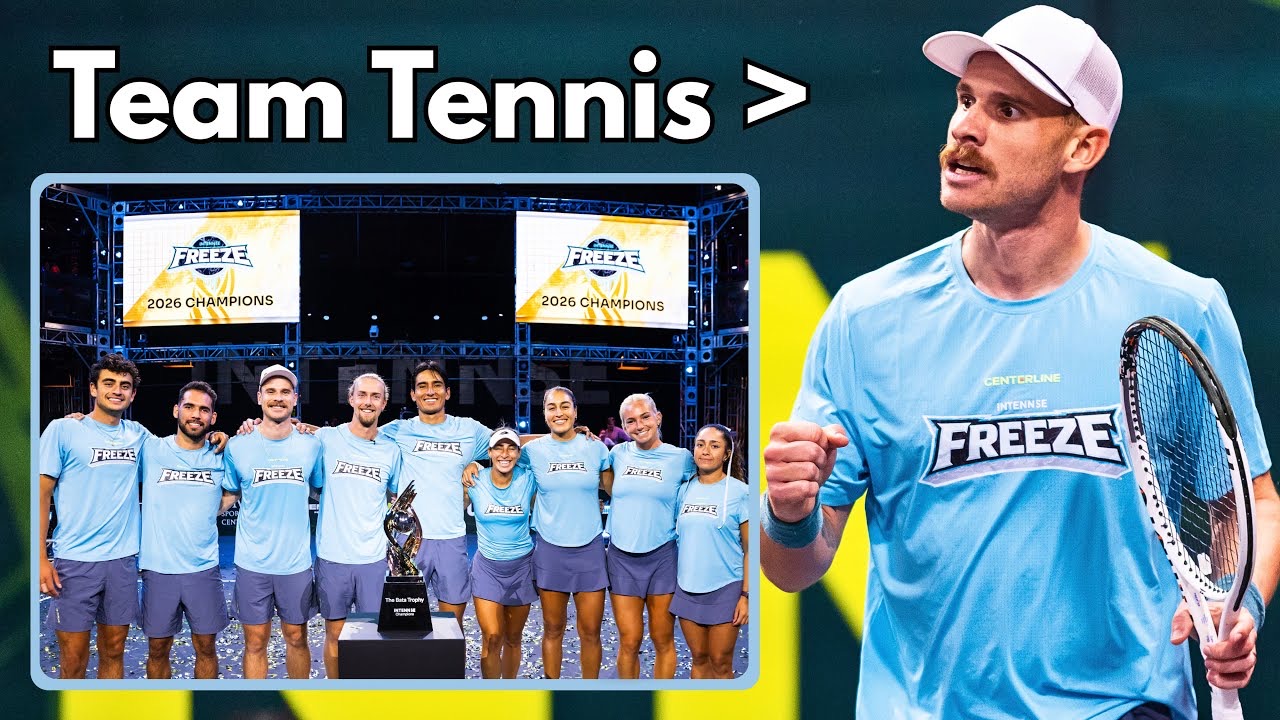
Karue Sell — “the best (and highest paid) experience of my tennis career” · 19:38 · Watch on YouTube
■ Why we sent this
We’d like the family to own part of it.
A stake in the league itself — the format, the draft, the season and the pathway underneath them — with the venues and the calendar as the reason it would be yours to shape.
Why the family, specifically
When the Charleston event came up for sale, the reasoning was that it “made sense for somebody in the area to own it and to be a steward.” A league needs the same thing in every city it goes to, and it needs it most from people who already know what it takes to fill a stadium for tennis.
If it’s worth an hour, we’ll bring the model and the numbers, and make the time whenever it suits you.

■ Where an hour could lead
A seat at the league table
A stake in the property, and a voice in how it grows: from ten teams in one metro today to a home market for every team by 2028 — which cities, in what order, with which owners.
A team in Charleston
A resident professional team using Credit One Stadium and the clubs through the summer, with the city’s own players on its roster.
A curtain-raiser for Cincinnati
Championship Weekend placed at the front of the Cincinnati Open — team tennis to open the event, and a crowd already in the building for it.
After college
The professional team that the best college players currently don’t have, with a path from the junior academies to a drafted place.